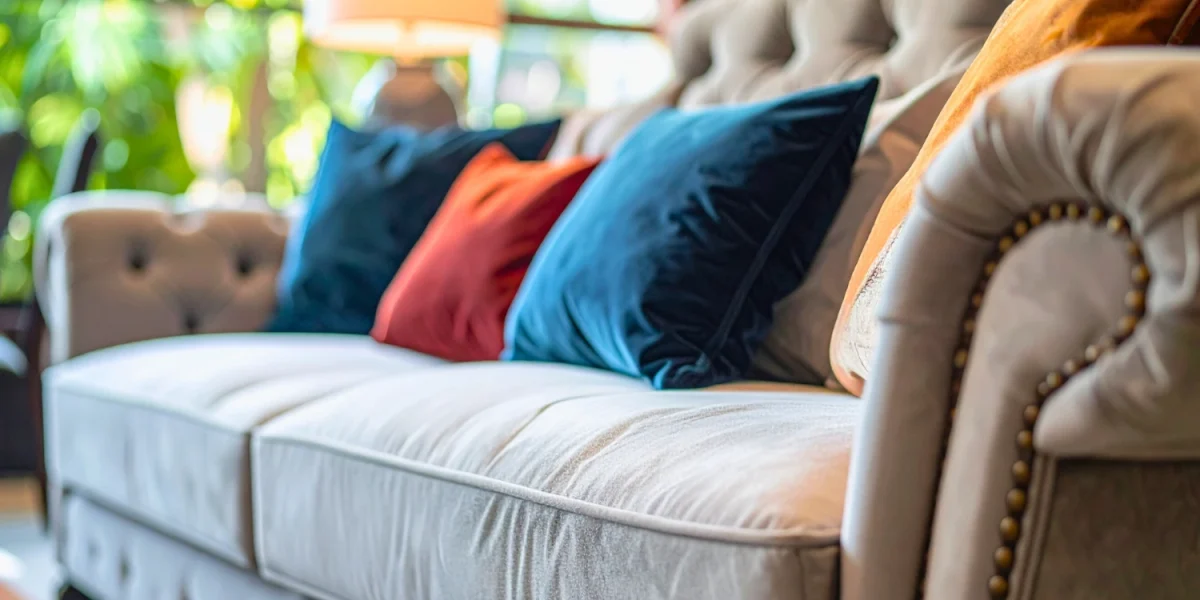
In a world dominated by fast furniture and two-day shipping, there is a quiet misconception floating around Los Angeles living rooms. It’s the idea that having something built just for you—specifically a sofa or a set of dining chairs—is a luxury reserved only for the ultra-wealthy or interior designers with massive budgets.
We hear it all the time when new clients walk into our shop or call us from neighboring cities. They assume that because we shape the wood, cut the foam, and sew the fabric ourselves, the price tag will be astronomical compared to what they see in a big-box showroom.
But when you actually peel back the layers (quite literally, in our line of work), the math tells a different story. It turns out that mass-produced furniture often has hidden costs that you pay in longevity, while custom upholstery is an investment in materials that actually work for a living.
The “Fast Furniture” Cycle
Think about the last time you bought a “great deal” sofa. It probably looked fantastic in the showroom. The color was trendy, the cushions were fluffy, and the price was right. But fast forward two or three years. What happens?
The seat cushions start to flatten like pancakes. The fabric begins to pill or separate at the seams. You might even hear a creak in the frame when you sit down quickly. This is the planned obsolescence of the furniture industry. Many factory-made pieces are constructed using particle board, staples, and lower-density foam. They are designed to travel efficiently in a shipping container, not to survive ten years of movie nights, jumping kids, or enthusiastic pets.
If you have to replace an $800 sofa every three or four years, you aren’t just spending money; you are entering a cycle of constant replacement. Over a decade, that “cheap” option becomes surprisingly expensive.
What We Mean by “Handmade” Legitamately Lasting Longer
When we talk about durability in our workshop here in LA, we aren’t talking about magic. We are talking about physics and material quality.
A custom-made sofa starts with a frame that is typically made of kiln-dried hardwood. We dowel and glue joints so they don’t wiggle. When we upholster a piece, whether it’s a new build or a restoration of a vintage gem, we use high-resiliency foam. This isn’t just fluffy stuff; it has a higher density that pushes back against weight, meaning it retains its shape year after year.
The true difference often lies in the suspension.
Mass-produced items often use simple webbing or sinuous springs that can sag over time. In custom upholstery, we have the freedom to use eight-way hand-tied springs—the gold standard for comfort and support—or heavy-gauge sinuous springs properly clipped and tied. This is the skeleton of your furniture. If the bones are strong, the piece lives a long life.
The Cost Myth: Custom vs. Big Box Retail
Let’s address the elephant in the room: Price.
Yes, a custom sofa generally has a higher upfront ticket price than the cheapest option at an outlet store. However, we are often surprisingly competitive with the mid-to-high-end retailers you find in shopping centers.
The difference is where your money goes. When you buy from a major national retailer, a huge chunk of that price covers catchy television ads, corporate overhead, international shipping logistics, and warehousing.
When you work with a local workshop like ours, you are paying for:
- The actual materials (wood, foam, fabric).
- The skilled labor of the craftsman cutting and sewing in Los Angeles.
- The expertise of fitting the piece to your specific space.
Because we are right here, we don’t have the massive shipping bloat. We cut out the middleman because we are the makers. This allows us to put more value into the piece itself rather than the logistics of getting it to you. For commercial clients, like restaurants or bars looking for booth seating, this is even more critical. You cannot afford to have booths that rip or sag after six months of heavy traffic. Paying for commercial-grade durability upfront saves thousands in downtime and repairs later.
Getting Exactly What You Want Saves Money Too
Have you ever bought a piece of furniture that was “almost” right? Maybe it was a little too big for the wall, or the velvet wasn’t quite the shade you wanted, but you bought it anyway. Six months later, you realize it doesn’t really fit your lifestyle. Maybe the fabric stains too easily, or the depth is uncomfortable for your height.
That feeling of regret is a cost.
Custom upholstery eliminates the “make-do” compromise. If you have a weird corner in your living room, we build a sectional to the exact inch required to maximize that space. If you have cats that love to scratch, we guide you toward high-performance crypton fabrics or commercial-grade vinyls that are virtually indestructible, saving you from having to reupholster two years down the road.
We recently had a client dealing with a tricky layout in a specialized hospitality space. They had wasted money on pre-built chairs that cluttered the walkways. By creating custom banquettes that hugged the walls perfectly, they actually gained seating capacity. That is a direct return on investment.
The Sustainability Factor
There is also a functional and ethical solidity to keeping furniture out of landfills. Because our frames are built to last 20, 30, or even 40 years, you don’t throw the sofa away when styles change. You simply change the fabric.
We have clients bring in frames we built for them fifteen years ago. The structure is perfect. They just want to switch from a beige floral to a modern navy velvet. We strip the old fabric, maybe fluff up the padding, and apply the new look. Ideally, a good piece of furniture is a one-time structural purchase and a lifetime of aesthetic flexibility.
Whether you are looking for slipcovers to protect your investment or a complete custom build for your family room, the “handmade” route is more accessible than you think. It connects you to local Los Angeles craftsmanship and ensures your money stays in the quality of the product, not the marketing budget.
If you’re tired of disposable furniture and want to explore what it looks like to create something permanent for your home or business, we are always happy to walk you through the materials. You might find that “custom” is actually the most practical choice you can make.
