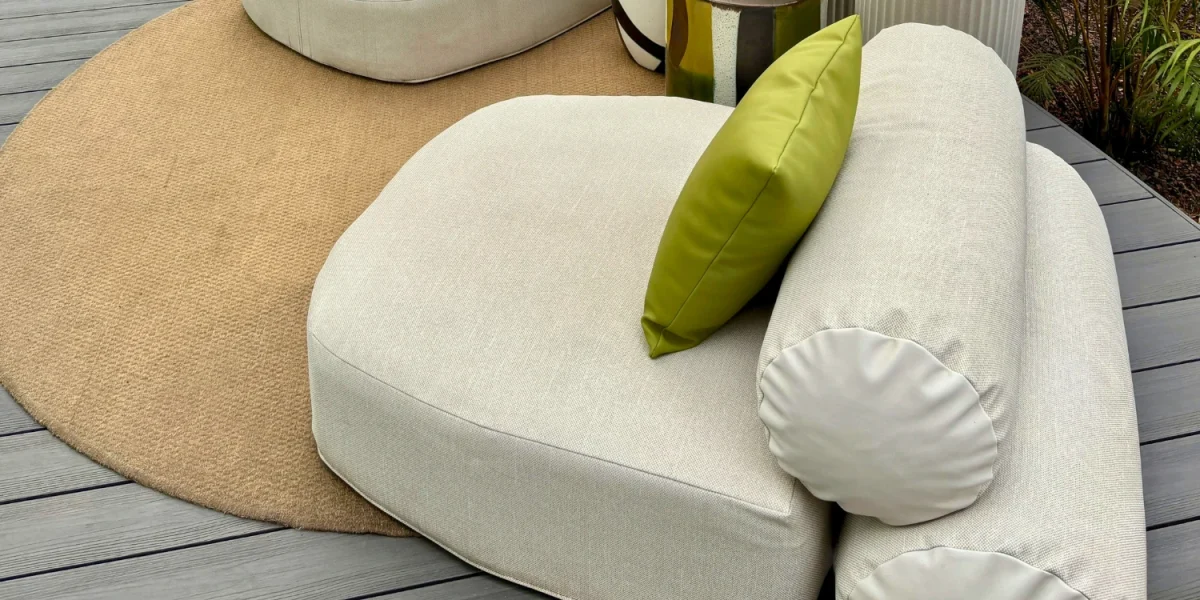
Living in Los Angeles, we are blessed with incredible weather that lets us use our outdoor spaces year-round. Whether you’re hosting a dinner party on a patio in Santa Monica or setting up a lounge area for your restaurant in Silver Lake, the furniture you choose needs to stand up to the elements.
One of the most common conversations we have with clients involves fabric selection for outdoor cushions. Everyone wants their investment to last, and naturally, terms like “waterproof” and “water-resistant” get thrown around interchangeably. But from an upholstery perspective, these are two very different things with very different applications.
If you are planning to update your patio furniture or need new cushions for your commercial outdoor seating, understanding this distinction can save you a lot of headache—and money—down the line.
The “Waterproof” Myth in Upholstery
Let’s start by clearing up a common misconception: completely waterproof fabric for comfortable seating is extremely rare, and usually, you wouldn’t want to sit on it anyway.
True waterproof material is like a plastic tarp or a heavy vinyl raincoat. It creates an impermeable barrier. Water hits it and slides right off. Nothing gets through. While this sounds great in theory for a rainy day, it’s terrible for comfort. If air cannot pass through the fabric (breathability), then when you sit on it on a hot July afternoon, the cushion will feel hot, sticky, and sweat-inducing.
Furthermore, if a cushion were 100% waterproof sealed, the air inside the foam would have nowhere to go when you sat down. It would feel like sitting on a balloon. For high-end custom furniture, we need materials that breathe.
When we talk about “waterproof” in the context of high-quality upholstery, we are usually talking about performance fabrics that have extremely high water repellency, often aided by a barrier backing, but still allow for some airflow.
What Does Water-Resistant Actually Mean?
Most of the high-quality outdoor fabrics we work with—like Sunbrella or similar performance brands—are technically water-resistant (or water-repellent).
Water-resistant means the fabric is woven tight enough, or treated with a finish, that makes it difficult for water to penetrate immediately. Picture a bead of morning dew sitting on top of your patio cushion. It stays in a droplet shape rather than soaking in. That is water resistance in action.
However, if that water sits there for days, or if you have a heavy downpour and the water pools on the seat, it will eventually seep through the weave of the fabric.
This isn’t a defect; it’s a trade-off for comfort. Water-resistant fabrics feel like textiles. They are soft to the touch, they come in beautiful woven textures, and they don’t stick to your skin. For 90% of residential projects here in Southern California, water-resistant is exactly what you need.
Choosing the Right Foam is Just as Important
This is a detail that ready-made furniture stores often skip over, but as custom upholsterers, we obsess over it. The fabric is only half the battle. If water does get through your fabric, what happens underneath?
Standard indoor foam acts like a giant sponge. If it gets wet, it holds onto that moisture, leading to mildew, mold, and heavy, soggy cushions that take days to dry.
For outdoor projects, we recommend Reticulated Foam (often called “Dry Fast” foam). This foam has an open-cell structure. It looks a bit more porous than standard yellow foam. The magic of reticulated foam is that it allows water to drain right through it rather than absorbing it.
So, even if your fabric is only water-resistant and a storm soaks your cushions, the water passes through the fabric, flows through the foam, and exits out the bottom (usually through a mesh vent strip we sew into the casing). The cushion dries out quickly, and you don’t get mold growth. This combination—water-resistant performance fabric plus quick-dry foam—is the gold standard for luxury outdoor seating.
Commercial vs. Residential Considerations
The needs of a busy restaurant patio are different from a backyard in Bel Air.
For Residential Homes:
We almost always lean toward high-end woven acrylics (water-resistant). You want the luxury look and the soft hand. Since you are likely taking care of your furniture—perhaps covering it during the rare heavy rains or bringing cushions inside during winter—comfort is king.
For Commercial Spaces:
If you run a hotel poolside bar or a restaurant with a high-traffic patio, we might explore solution-dyed vinyls or fabrics with a crypton-like barrier. While these lean closer to “waterproof,” modern technology has made them much more attractive than the shiny vinyl of the past. They can be wiped down instantly after a spill, which is crucial for turning tables quickly.
However, we still have to manage the seams. Even if a fabric is waterproof, needle holes create entry points for water. For commercial clients, we often use specific stitching techniques or seam sealants to minimize this risk, ensuring the booths and chairs last through seasons of heavy use.
Maintenance is the Key to Longevity
Regardless of whether your fabric is labeled water-resistant or waterproof, nothing is maintenance-free.
Over time, dirt and dust settle into the weave of outdoor fabric. If that dirt isn’t cleaned off, it can trap moisture against the fibers, which promotes mildew growth on the dirt itself (even if the fabric is mildew resistant!). Furthermore, the water-repellent finish on fabrics can wear down over years of scrubbing and sun exposure.
We always advise our clients to do a simple spray-down with a hose once a month to knock off loose dirt. If you notice water stops beading up on the surface, you don’t necessarily need to reupholster immediately. There are fabric guard sprays available that can restore that water-repellent finish to extend the life of your cushions.
When Should You Go Custom?
Many people realize the difference in quality only after they have bought a “waterproof” set from a big-box store, only to find the fabric fading and the cushions flattening out after one summer season.
Custom upholstery allows you to dictate exactly how your furniture performs. Do you have a spot that gets direct, harsh sunlight for 8 hours a day? We need to prioritize UV resistance alongside water resistance. Do you have a covered patio where rain never hits, but humidity is high? We focus on breathability.
Whether we are creating brand new custom cushions for a built-in bench or reupholstering a vintage wrought-iron set you found at an estate sale, we tailor the materials to your specific micro-climate and lifestyle.
We service the greater Los Angeles area and are happy to assess your current outdoor setup. Sometimes, the frames are perfect, and all you need is an upgrade in foam and fabric to turn a soggy, uncomfortable seating area into a true outdoor living room.
